Mission Statement

So there is no misunderstanding, this blog isn't just another ex-pat site full of information and miscellaneous advice (unless you consider learning through my mistakes and observations a type of advice). My vision for this blog is to let people in on the truth of what it means to live in this crazy and lovable country. If you want to continue glorifying and romanticizing Italy, then some of what I have to say may be hard for you to hear. Consider yourself warned.

Tuesday, August 16, 2011

August Hush


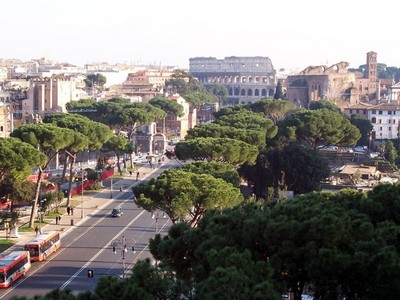
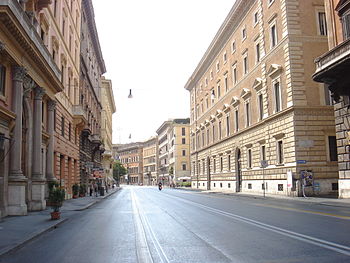
       There is an eerie calm in Rome. The streets are silent save for the occasional ring of a tram's bell or the whine of a distant ambulance. Entire stretches of store fronts are shuttered and barred with iron gates while children play soccer in the middle of wide, deserted intersections. One could half expect to find two cowboys (or shall we say gladiators) facing off at opposite ends of Piazza Navona, as a hot, lonely breeze scatters discarded newspapers across their path. First-time tourists look around themselves at the empty metropolis, sweaty and baffled.

      Unless you're Italian or have previously visited Rome in August, you may be one of these baffled tourists and begin to suspect that a plague of epidemic proportions has annihilated half the population and sent almost everyone else to Las Vegas with Randall Flagg... or perhaps something less apocalyptic. Wherever your imagination takes you, you will certainly get the sense that you are seriously out of the loop. But don't worry. It's just August. Rome is away on vacation.

      In August you cannot take for granted that any of your favorite stores or restaurants will be open for business. If there's road or track work to be done, it will be done at this time, so you also cannot take for granted that public modes of transportation will be functioning in any reliable way. What you can take for granted is that it will be about 97°F and humid under the blazing sun and that the rare bus that finally passes will most likely be un-airconditioned and crowded with smelly tourists. So you may be surprised to hear me say that despite how unappealing that sounds, now that I've lived here for a few years and have gotten to experience the full spectrum of seasons, I actually find it to be one of the most enchanting periods to be in Rome.

      Not counting the totally unmemorable first three years of my life, until the age of 28 I had only been in Rome during or around this time of year and therefore lacked a proper comparison. To me the eternal city was eternally hot, hazy, and just about empty. “Chiuso per ferie” (closed for vacation) is and was the common hand written sign taped to the portcullis of most of the privately owned businesses in the city, making me wonder whether everyone leaves because everything is closed or if everything is closed because everyone leaves. But who cares? All I know is that when the cloud of chaos lifts, the drone of the city turns off in a rather spectacular way and makes life audible again; the wind in the leaves, the squawk of seagulls over the river, the pitter patter of individual sandals on the sidewalk... People even seem to talk in hushed tones so as not to disrupt the unexpected tranquility.

      Where is everyone, you ask? Well, clearly there's another and, if you think about it for a moment, obvious side to this scenario... When the residents of Rome pack up their cars and their RVs and hit the road like one giant organism, they all seem to go where almost everyone else has gone: to the seashore, where one square meter of sand-space is at a major premium and where you're guaranteed to get elbowed and kicked by children in the water. As much as I love the Mediterranean beaches, you might have to actually pay me a substantial sum to convince me to go there during these last two weeks of August because my idea of a relaxing day does not include listening to other people's screaming kids and getting sprayed with sand every time my neighbor, mere inches away, adjusts his towel. Luckily, for most of the summer this is the situation only on weekends, so if I want some beach time I make sure to go between Monday and Friday. But, as of yesterday, the beach is off-limits to me everyday until September.

      Yesterday was August 15th, Ferragosto, the summer holiday of holidays and the peak of the exodus. No other country that I know of has such a clear-cut national vacation time. Yes, in the US we have Memorial Day Weekend and Labor Day Weekend to help us define the start and end of summer, but apart from those two crowded weekends, the rest of the summer is spread out pretty evenly. In Italy, however, everything gets condensed into the two and a half weeks between August 15th and September 1st, so what would otherwise be a slow trickle in and out over the course of a few months, becomes instead a tidal wave of humanity crashing upon the coastlines, leaving behind it a barren calm and the best parking spots ever.

      In all honestly, it shocks me that I've become someone who so shuns the hustle and bustle of city life. Of course I still appreciate the cultural gifts that a city like Rome has to offer, but after ten years in New York City and another two in Rome I now have a highly soluble, rice-paper-thin layer of tolerance for traffic, smog, litter, and general human behavior and can only be submerged in the whole mess for several hours at a time before starting to totally lose my mind. August is just...different.

      Of course it's not like the entire city is completely devoid of human life. Just stroll past the Colosseum or the Vatican and you'll see the vibrant fannypack-wearing, trinket-buying throngs, blissfully unaware that they're being shown a highly censored version of Rome. In fact if you're looking for a real slice of life, then absolutely do not come in August. If you want to experience the adventure of trying to cross a busy Roman intersection while motorbikes swarm the streets like flies, or if you want to go shopping on Via Dei Giubbonari for some unique Made In Italy fashions, or if you want to go barhopping and people-watching in the crooked streets of Trastevere, then, I repeat, this is not the right time for you. For you there are eleven other months to choose from that should suit you just fine. Leave this one to the misanthropes like myself.

 
*If you are the copyright holder of one of the photos used in this post please contact me if you wish for it to be removed.


Tuesday, July 19, 2011

Once Upon a Time In Italy


      I'm late. Rehearsal started at 8. What was I thinking stopping to browse in that shoe store?! I knew I wasn't going to buy anything anyway. Now I've over-killed my time! Which would have been okay if the bus had been conveniently waiting for me, but it wasn't and I made the wrong decision. I waited for it! I waited long enough that it made no sense to stop waiting and walk instead, like I should have done from the beginning! So I became one more sardine, packed in and marinating in the unairconditioned Roman heat. Now, after elbowing past passengers trying to get on the bus before letting me off of it and after a Berlusconian motorcade interfered with both pedestrian and vehicular traffic for a solid five minutes, I can finally see the entrance to the rehearsal hall. My legs, despite the intermittent jog, just can't carry me any faster. I'm out of breath and a drop of sweat is trickling down the back of my neck while I battle with a bag that slips off my shoulder every time I pick up the pace. I'm already dreading my entrance, worried about interrupting the continuity of the rehearsal, or worse getting flashed a withering more-effort-next-time-please glance from the director. I pause for a moment as the final pangs of the cramp in my side pass and then gently push open the door....
      About 15 of the 55 members of the choir are milling about chatting casually. Our director is still nowhere to be seen. A few people turn and greet me as, uselessly breathless, I walk in. It's 8:13pm.

      Every. Time.

      This is, of course, a simulated and more or less generic scenario. I have lived through various such permutations involving ice cream, bicycles, scarves, and political demonstrations, to name a few. Each time is as horrifyingly stressful to me as the last because I suffer from self diagnosed (and self invented) OCPD: Obsessive Compulsive Punctuality Disorder. This causes me to feel lateness as an actual physical discomfort that begins somewhere just behind my bellybutton. The more tardy I become the further the discomfort spreads until my feet are tap dancing on their own and I start singing chromatic scales while making beebledy-beebledy sounds with my index finger on my lips. Whoever is with me will not be spared the anxiety as I ask them the time every thirty seconds while obsessing over everything I could have done differently to avoid this. But here's the kicker. Every single time, after enduring painful running cramps and near collisions with slower pedestrians, I arrive at my destination... and I'm still the one who ends up waiting.

      So, a word from the wise: It's really difficult to be late in Italy. Oh, I'm not saying it's not possible to miss a plane, train, or the first five minutes of a movie. I'm talking primarily about person to person appointments. It's difficult. Really. Because I have found that no matter how late I think I am, the person or people that I'm meeting almost certainly arrive later than me. I'm sharing this tidbit of information in order to spare whomever reads it (and subsequently moves to or visits Italy) the stress and strain that may accompany any effort to be on time. Basically, appointment times, much like traffic lights, are simply more of a suggestion than a hard fast rule.

      I, however, slow down for a yellow traffic light, so where does that leave me? I'll tell you where that leaves me. That leaves me OCPD-erring on the side of caution. If a bus ride takes roughly ten minutes, I also plan for the waiting time of the bus (which could be double that) and the potential traffic or weekly worker's strike that it could encounter. So if I have to meet someone at eight, I'll leave no later than seven twenty-five. And that means that I'm more-than-frequently tragically early.

      As you can imagine I may be one of the only people in the entire country who actually organizes her travel-time this way. Most people leave late to begin with and plan for the perfect transportation scenario (something that, here in Italy, exists only hypothetically or when you don't actually have to be anywhere by a given time) therefore compounding their lateness and my irritation. The bizarre thing is that ultimately this seems to work for them because when someone says “eight-o-clock”, what is actually understood is “roughly eight thirty”, and so each arrives at “nine”, precisely and punctually late. It's not that I don't understand the theory of this trick or the stress that it could (always in theory) spare me. It's that punctuality is so ingrained in my psyche, that even if I plan to be late, I'm often still on time. 
 
      Then again, I've only been living here for a few years and sadly, despite my OCPD, I have recently become aware of the fact that scenarios such as the one stereo-typified at the start of this entry are becoming more and more frequent in my life. I hadn't really taken the time to notice it until a friend of mine and her husband came to Rome about a month ago from the US. Each time we were to meet up, I somehow arrived late. It was nothing drastic. Ten minutes here and there. Ten minutes that would have gone unnoticed were I meeting Italians because they would have shown up at least five minutes later than that anyway. Ten minutes that spoke volumes to me.

      Evidently Italian lateness is not something that one is born immune to, nor something that one can be vaccinated against. It is a rapidly mutating and highly contagious virus that begins to infect you the moment you board your Alitalia flight one hour behind schedule and which then continues groping it's way through your system with each speed bump you must slow down for. A fifteen minute wait for a train here, a half hour wait for a restaurant reservation there.... Before you know it you're automatically adding at least ten reckless minutes to the time on your watch. The only cure I know of is to get out of the country...fast, which is why tourists suffer no permanent damage.

      I fear it may be too late for me though. Since my mother is Italian it's probable that I was already exposed while in the womb, making me all the more susceptible now in adulthood. Even my father lived here for years, at one point apparently stating that if one really thought about it, why should a train arrive at any particular time. So let's face it, I never stood a chance. For now I still appear chronologically healthy within the framework of this country, but I'm afraid that there are too many signs indicating a slow and steady deterioration. I have found myself running to catch the train one too many times, I experience a rush of relief when I arrive late to meet a friend and she isn't there yet, I've heard myself blame fictional traffic jams for my delay... just isolated symptoms that, when put together, indicate a larger dysfunction.

      Despite the fact that perhaps this trait was misleadingly dormant in me all along, I can't help but blame Italy. I mean, what is it about this country? The Mediterranean sun? The passeggiata culture? The unreliability of the sidewalk clocks? All I know is that it is becoming ever more difficult for me to show up on time for appointments, social or otherwise. I can't help but worry about what the future has in store for me. Will I eventually become so throughly Italian that I will be able to casually walk into choir rehearsal half an hour late without batting an eyelash, confident in the knowledge that there will surely be someone who shows up later than me? I sincerely hope not. I don't think my OCPD could take it. In the mean time I leave you with this. They say that when Mussolini was in power the trains ran on time... I guess I can buy that, but I imagine that those were some very empty trains.


Wednesday, June 22, 2011

These Italian Shoes Are Made For Walkin'


    There is almost nothing that makes me feel more like an American... no, like a New Yorker... than going for a walk in Italy. I lived in New York City for ten years and during that time walking was a mode of transportation, a way to get from point A to point B. I'm sure I'm not the only New Yorker to develop a kind of personalized walking technique. Mine involved long strides, always looking at least ten feet ahead to allow for maneuvering time, efficient use of crosswalks, keeping to the right of the sidewalk in heavy pedestrian traffic, and using Broadway's diagonal trajectory as a kind of worm hole through Manhattan space-time. The rules of NYC pedestrian etiquette are many and unspoken, which is why to an Italian tourist, suddenly thrown into the swarm of millions of seasoned city walkers all at once, I know that it comes across as chaotic and stressful. But I guarantee that there is an order and a beauty to it. An order and a beauty that that same Italian tourist will interrupt when he stops at the top of the subway stairs to get his bearings, or when he slows down to look up at the skyscrapers, or when he holds hands with his family of four, forming an impossible-to-pass human chain. You see, he is not walking.... He is going for a passeggiata.

    Passeggiata translates literally to “a walk”. But culturally it's so much more than that. It's a social event, it's a date, it's a way to relax. It is, most importantly, NOT just a way to get from here to there. Allow me to explain. On a summer night, after dinner, people may go for a passeggiata. If they live in a small town that means they'll stroll through the town piazza, chat with neighbors, get some ice cream, stop on a bench to look at the stars. If they live in a city it means they'll people watch in the windy streets, enjoy the music of street performers, buy watermelon from a vendor, relax on the steps of a fountain. Sure they may stop at a pub for a drink or decide to get some tiramisù at a sidewalk cafè, but that is all part of the passeggiata.

    A passeggiata can also be a hike through the woods or a day spent exploring nearby towns. It can be for exercise, to kill time before a movie, or to help you digest a big meal. It can be a solitary, meditative moment, a romantic date, or a group excursion with friends. There are no rules for the passeggiata save for one: there is almost NEVER a clear cut route or destination. And that is the very part that I struggle with.

    In New York I was a walker. I would regularly link together various errands, creating a strategic and efficient connect-the-dots of streets and avenues. I might glance in shop windows as I passed, but for the most part I was focused on my next goal and on getting there as quickly as possible. If I was going to the pharmacy, I was going to the pharmacy. If I was going to the park, I was going to the park. What I passed on the way was of little importance, partly because New York City “landscapes” tend to be repetitive and lacking in what I consider pause-worthy wow factor, but mostly I think because the “goal habit” is hard to break.

    Either this is just how I'm programmed or living in New York City for ten years has really taken its toll, but it turns out that I now have no idea how to go for a simple pleasure stroll. I need a destination and I need it bad. Often on my husband's day off  he will propose going for a passeggiata somewhere and I truly wish that I could muster more enthusiasm for something that I know he enjoys so much. But tragically, the idea of wandering for the sake of wandering does not stimulate us in similar ways.

    The difference between walking and passeggiare is evident not only in our perspective on nature walks, but also in the way we walk through the city streets. I'll never forget the first time I showed my husband my Manhattan walk, the walk that I had been forced to stifle for months. I released myself into it, like a strong dog finally being let off her leash, and when after several moments I finally turned to see his reaction I found him about twenty meters behind me, bewildered and running to catch up. I immediately slowed back down and have gradually been losing that walk ever since. It's just not feasible in a country of passaggiata-ers.

    Ultimately my question is this: Is it an Italian vs. American difference or is it a world vs. Jessica difference? I find it hard to imagine that I'm the only one and am inclined to believe that this must come from having grown up in the instant-gratification-seeking, summer-blockbuster-watching, reading-the-last-page-of-a-book-first (I don't actually do that) turn of the millenium American culture. It's a journey vs. destination way of living life. It's the difference between working to live and living to work. And when I think about it like that I obviously choose the former.

    It's now officially summer which is prime passeggiata season. Down in Rome the evening street fairs along the river and under Castel Sant'Angelo will be in full swing every night while all of the small towns in our area will start having their own individual weekend festivals, complete with truffle tastings, fried pizza, and group dances at sunset. Outside our house the temperature will be mild in the early evening when the jittery silhouettes of bats start swooping low in the sky and the subtle scent of jasmine hangs on every breeze. When my husband suggests that we go for a passeggiata, maybe get some ice cream, I will have to overcome that old familiar feeling that without a point B there's no reason to walk away from point A, because by now I should realize that I'm always so happy when I do.


Saturday, May 21, 2011

Dr. Who's Paying For This?


     On May 3rd, at roughly 11:30pm, my husband and I were involved in a rather serious car accident with a Lamborghini. My husband's 1981 Alfa Romeo 33, which he had been meticulously restoring for the past few years, did not survive the crash. We, on the other hand, somehow emerged with only five stitches in the back of the head (him) and pretty bad whip lash (me). We were very lucky, but that is all I will say about the accident itself.

      About fifteen minutes after the accident, which admittedly felt like an eternity at the time, an ambulance showed up and took us to the nearest emergency room where my husband got stitched, CAT scanned, and sonogrammed for internal injuries while I had the scrape on my forehead disinfected and my neurological responses tested. The next day we went to our own doctor for an antibiotic prescription to prevent an infection of my husband's head wound and he was given two weeks of paid sick leave from work. In the meantime my neck had started hurting and so back to the emergency room we went, where I was x-rayed and subsequently informed that my cervical curve was temporarily straightened and that I should wear a neck brace for at least a week. Ten days later my husband went back to our doctor to have his stitches removed. At no time during any of this ordeal did anyone ask about insurance coverage or payment of any kind. Only the antibiotic cost €2.50, and only because we chose the name brand. The generic brand would have been free.

      Now, I don't honestly know how this all would have gone in the US, but I'm willing to bet not like this. At best there would have been the hassle of co-pays and deductibles and at worst there would have been the knowledge of paying the very arm and leg that we hadn't lost in the accident. In fact, I believe that the reality of medical care in a country with socialized medicine is so far from the reality of medical care in the US, that most American citizens truly can't comprehend what it means. I know that I initially couldn't.

      The first time I went to the doctor in Italy was a surreal experience. I probably didn't even really need to go, but I admit that I was curious. I called ahead, thinking I needed to make an appointment, but was told to just show up. After visiting with the doctor, it felt too strange to simply walk right out of the office so I went to the reception desk to see if there was something I needed to do, sign, pay... The receptionist just smiled and shook her head. But I still couldn't bring myself to leave.

      “You're really really sure? That's it?”

      “Yes.”

      “So I can just go?”

      “Yes.”

      Her eyes indicated that she was possibly entertained by my troubled expression. Finally, with an embarrassed and apologetic laugh I explained, “I'm sorry. This is new to me. I'm American.” The receptionist responded with another smile and an understanding nod. And I left.

      It's been a little over four years since that initial visit and though I'm able to preach about the beauty of socialized medicine, I find that it rarely occurs to me to take full advantage of it. Living in the US, uninsured for years, I would never think of going to the doctor for something as minor as a sore throat and a cough. This “habit”, for lack of a better term, turns out to be exceedingly difficult to rid myself of and leaves my husband at a loss for words. In the midst of a recent episode of bronchitis, I had to be nearly dragged to see the doctor. In the end I grudgingly went and was prescribed antibiotics...again free.

      As much as Americans don't truly know how different it all could be, the same goes for Italians, who generally (and I think obviously) take for granted the only system that they have ever known. My husband is one of these, and even after countess discussions on the topic I think he still harbors a profound shock that a country as civilized and revered as the US could be so backwards and barbaric when it comes to the health of its citizens. As for me, I didn't realize just how far removed Italians truly are from us until I overheard a neighbor complaining that her chemo-therapy drugs (whose market value is thousands of euro) would be costing her €9.... Take a moment with that.... To further understand her situation, know that this woman is middle-aged, unemployed, far from financially stable, and nonetheless going through chemo-therapy for breast cancer at no cost to herself other than this €9 prescription. People in similar situations in the US have been known to go bankrupt, die, or both when confronted with such an illness. Of course illnesses and circumstances such as these are an extreme and are therefore something that relatively few of us actually have to deal with. For that reason it's easy to fall into complacency, coming to regard the doctor as a luxury to be taken advantage of rarely and learning to ignore and/or live with our various aches and pains.

      So when a friend of mine from NY came to visit a couple of months ago I immediately jumped at the chance to have her experience the other side. She suffers from migraines and we had gotten to talking about how her insurance stopped covering one of her prescriptions, having arbitrarily decided that a cheaper (and ultimately ineffective) medication should suit her just fine. I took her to my doctor, he wrote her a prescription for the proper drug, we went to the pharmacy, and IT WAS FREE.* Needless to say, she too returned home preaching about the wonders of socialized medicine.

      I'm not saying that there are no flaws. Sometimes hospitals look a bit run down and sometimes you're tenth in line at the doctor's office. Those who can afford it may choose to go to a costly private clinic instead of roughing it with the rest of us. But that is an individual choice. No one will ever die because they couldn't afford a treatment, or worse, because their insurance company wouldn't pay for it. Maybe the most fundamental and life-changing thing that Americans can't imagine in all of this is the peace of mind; that in the midst of life's unexpected catastrophes one will be taken care of, no questions asked and no co-pays paid.

*Only medications that are considered “life-savers” or “quality-of-life-savers” are free. Others will cost several euro.


Saturday, April 23, 2011

Doggy Bag Afternoon


      My husband says that I'm digital, one or zero, all or nothing. I either don't have to pee or am in emergency pee-pee dance mode. I'm either covered in goose bumps with teeth chattering or the heat is sucking the very life blood from me. I'm either the life of the road trip or I'm zonked out and drooling on my own shoulder. And I'm either ready to eat an entire tofurkey or I'm so full that I'm unbuttoning my pants in public places. Obviously over time I've adapted to accommodate my various physical needs and as a result I have an uncanny radar for public restrooms, dress in multiple layers even in August, and have a sixth sense when it comes to waking up for my train stop. The one thing that I have not learned to do is order the proper quantity of food at restaurants.

      Looking back on my life I acknowledge that my eyes have been notoriously bigger than my stomach from the very beginning. I believe that my lack of adaptation to this particular trait is due entirely to the existence of the doggy bag. I grew up in a land where it didn't matter if you didn't finish what you ordered because you could bring it home and eat it for lunch the next day, where if there was even a bite of something left on your plate the waiter would offer to wrap it up for you. I am now living hungrily ever after in a land far far away from that one.

      When I first arrived in Rome four years ago, so automatically did I take the doggy bag for granted, that it didn't even occur to me that it was something that could be different from country to country. I suppose a clue could have been the first time that I asked to take something home and the restaurant did not physically have the proper container in which to put my left-overs, bringing them to me (after looking at me oddly) in a small pizza box. I think I just looked oddly right back at them.

      The sequence of events over the next few months is foggy, but somehow it eventually came to my attention that in Italy the taking home of left-overs is generally looked down upon. I was incredulous.

      “But that's such a waste.”

      “But it's food that I've paid for. Why shouldn't I be able to take it home? What do they care?”

      “But that's such a waste.”

      My argument was valid, but repetitive at best. Still, everyone to whom I pointed out the logic of my thinking and the flaw of the Italian custom agreed with me. Yes, there should be nothing wrong with bringing left-overs home from a restaurant, but no, they would not be doing it.

      It wasn't until I really probed my pre-husband on the matter that we began to form an idea of why there is such a stigma associated with something that makes so much sense. His hypothesis comes down to an anti-post-war mentality. Italy was a country that suffered extreme poverty and hunger after WWII. Nothing was wasted. As the country's economy slowly climbed back to prosperity it became a matter of personal and family pride to be able to afford freshly prepared food everyday. Somehow, three generations later, this has stuck and therefore one must be a terrible cheap skate or seriously impoverished to want to bring something home from a restaurant.

      So I decided to personally start changing this ridiculous rule of etiquette. I decided not to care what others thought of me. I decided that the next time we went out to dinner, I would walk into that restaurant, look at that menu, and order my heart out without worrying about having to finish everything right then and there. And then I would boldly ask what no Italian had asked before: to take home my left-overs!

      But in the end it proved more difficult than I had imagined. At the close of our next meal out, when it was clear that what was still on my plate would be staying there, I looked imploringly at my husband and asked him to ask, but he just shook his head and suggested that I speak with a thick American accent so that my faux pas could be attributed to my being a tourist. I scowled at him, but began planning out what I was going to say, making it sound as nonchalant as possible. And when the waiter came:

      “No, no dessert thank you. Just the check.”

      What?! To my shock and dismay it turned out that I did actually care what they thought of me. And as a result no left-overs were brought home.

      In the long term, this situation will never do, especially not for a shamefully inaccurate eye to stomach ratio such as mine. Either I am going to have to learn to be That Person, or I am going to have to learn how to order food. With the help of my husband, we've been working on the latter task, but it really is deceivingly difficult as I'm always tragically convinced that I'll be able to eat everything I've ordered. My husband is the one who bears the brunt of this in the end, forcing himself to finish my dinner as well so that it doesn't go to waste. He has come to dread the tell-tale moment when I look at him sadly over my far-from-empty plate with defeat in my eyes.

      “No. Seriously? Already? Did you even touch it?”

      “Yes, but I'm full. Do you think we could ask to take it home?”

      “Sure. Go ahead and ask them.”

      “They'll think I'm crazy.”

      “Maybe.”

      “Can you ask for me?”

      “No.”

      “Please?”

      “No.”

      “Alright, well I guess it will get thrown out then.”

      “Oh, give it to me.”

      He blames me for the pounds he's put on since we've been together... He may have a point.

      This doesn't mean that I've given up in my quest to bring the doggy bag to Italy. Choosing my venue carefully, I have on several occasions thus far succeeded in asking to have my dinner wrapped up. These were moments of personal triumph for me and, I believe, important first steps in what I am now calling the “Doggy Bag Movement”. Which is why, as I write this I am reaching out to anyone who while in Italy has sadly watched their dinner go to waste, to anyone who likes cold spaghetti for lunch, to anyone who resents being too full to order dessert... Let's all of us make a pledge, and in so doing help the Italian people as well!

I pledge deliverance from the customs of the restaurants of Italy, and proclaim this right which we demand: one doggy bag, on the table, undeniable, with lunch tomorrow and dessert tonight for all.

Thursday, March 17, 2011

Let Them Eat Pizza!


      I am sick of Italian food. There. I said it. And I'll add something else. I miss the variety of NY, where going out to dinner means choosing a restaurant based on the ethnic cuisine one happens to be in the mood for. Got a craving for Ethiopian food? Thai? Mexican? Indian? Raw? Fancy nouveau American? For every random craving there are at least ten potential restaurants within walking distance from wherever you are... including Italian. (Don't actually look up that statistic.)

      As I write this I can already hear the public outcry and the indignation, reminding me that I live in arguably one of the best food countries in the world. And my response to all of you is this: I don't care. When I go out to dinner I can already predict what most of the dishes on the menu will be, and I'm talking antipasto, primo, AND dessert. (I don't eat meat so I ignore the secondo, but I'm still pretty sure it wouldn't impress me with any surprises.) As I scan a menu it's possible that I may find one thing that's a little “different” and I'll probably order it even if the ingredients aren't things I'd normally be drawn to. Ex: trofiette with radicchio pesto... I don't even really like radicchio that much, but at least this dish was making an effort.

      I'll tell you what I miss. I miss being able to order something like a warm beet salad with roasted fennel and walnuts on a bed of arugula drizzled with a raspberry citrus vinaigrette. I miss butternut squash soup and truffled mashed potatoes. I miss the food of trendy NYC restaurants where the chefs treat their menus like an expressive form of art, playfully combining unexpected ingredients to create surprising new flavors. I miss veggie burgers on multi grain bread with sweet potato fries and fresh field greens. I miss crunchy vegetables! (Sorry folks, but I gotta bust a bubble here. Italians do not know how to cook vegetables without turning them into baby food.)

      Sigh.

      I have to admit that even I would never have predicted this predicament. I mean people come to Italy looking forward to the food that they will eat. Thousands of diets are suspended here and thousands more are begun upon departure. And yet I am totally uninspired by the idea of going out to dinner.

      My gastronomic crisis hit a peak several days ago when I was out and about in Rome at lunch time. Lunch-on-the-go is possibly the most variety-less meal that exists in Italy and, unfortunately, this is a meal that I have to deal with at least two or three times a week. The choices are basically pizza, a sandwich, or an arancino (large fried rice-ball stuffed with something or other). Pizza is usually the easiest, but no matter how many different types of toppings I try, it's still pizza. The vegetarian sandwiches tend to be rather flavorless. And I'm sorry, but large fried rice-balls just don't feel like the healthiest and most well-rounded choice. But this selection is what I was faced with yet again on Tuesday.

      As I weighed my options and determined that I didn't want any of those things, my mind focused and I saw clearly what it was I craved. A big, hearty salad. That's it. So simple and yet so unattainable. And as I looked at the pizzas and golden brown fried surfaces laid out before me my focused mind began to panic and despair.

      “What do you want?” my husband asked me as he was making his decision.

      “A salad.”

      Silence.

      “I want a salad. That's what I want. I don't want anything here. I need a salad bar,” I replied in an increasingly whiny and desperate tone.

      “This isn't NY.”

      Oh God. How true that was. I thought about my last job in NY. Right across the street was a deli with a huge create-your-own-salad counter. My eyes glazed over as I began to mentally toss mixed baby greens with shredded carrots, parmesan, kidney beans, walnuts, cherry tomatoes, cucumbers, and a balsamic vinaigrette. Or if I didn't want salad they had about five different choices of hearty, delicious soups. Or I could build a complex vegetarian sandwich of cheese and avocado and lettuce and tomato on pumpernickel toast. And oh, the options at the food court on the lower concourse of Grand Central! The more I let my mind wander the more I wanted to cry.

      Meanwhile my husband just rolled his eyes at me.

      “You know what you're like? You're like those Italians that we make fun of who travel to other countries and still want pasta two times a day.”

      This was the wrong thing to say.

      “It's one thing to be away from home for two weeks and not be willing to taste new things! It's another to live somewhere for three years and miss something!! I can't even look at another slice of pizza!!! All I want is a healthy lunch!!!!”

      I believe the “discussion” ended more or less there.

      But now that I have had some time to mull things over, I actually think that there is a direct correlation between the lack of variety on the menus in Italy and the Italian tourists that can't go a day without pasta. What I am coming to understand is that the majority of Italians want familiar food, whether they are in Time's Square or Piazza Navona. So a restaurant owner in Italy can't stray too far from the classics because he knows that that's what people are expecting when they open the menu. A random dish with a twist might make an appearance, but for the most part if he wants to stay in business he's gotta give the people what they want. So in Rome there will always be bruschetta al pomodoro, fiori di zucca, prosciutto e melone, bucatini all'amatriciana, tonnarelli cacio e pepe, pasta alla carbonara, spaghetti al pomodoro e basilico, panna cotta, tiramisu, etc. etc. (Are you hungry yet?) Yes there are some variations, but there is little element of surprise.

      I'll concede (because my husband is reading over my shoulder and sputtering all over me) that this is not unique to Italy and to Italian restaurants. Chinese menus, Japanese menus, Indian menus, Mexican menus, etc., even diner menus, are all pretty predictable once you get the jist. (Maybe French and Spanish menus too but I'm not familiar enough with those cuisines to feel comfortable adding them to the list.) So this sort of leads me back to my first point. I don't care, or even really notice, if each restaurant serves the same dishes as its counterparts when I can whimsically choose a different ethnic cuisine for each meal. I'm spoiled. I'll admit it. It turns out that while Italians are spoiled by their pasta, I am spoiled by the variety I was once accustomed to!  

      In closing I would like to say that, despite everything, I still love and respect Italian food. This week I had a little melt down. I'll get past it, though I won't go so far as to say that it won't happen again. In the mean time, if someone is looking for a business opportunity in Rome, I'm thinking that a salad bar could be right on the money. Just make sure that it serves pizza too.

*If you are the copyright holder of the photo used in this post please contact me if you wish for it to be removed.
 

Monday, February 28, 2011

Tipsy Turvy


      If pressed I would have to say that the absolute biggest cultural difference between Italy and America boils down to one thing: Americans tip, Italians don't. This may sound to some like a minor technicality, but I guarantee you it is not. This is a difference woven into our very ways of living life and seeing the world. One can learn to adapt to the other but, like trying to use a pen with your other hand, it will just never feel right.

      For about seven of the ten years I lived in NYC I waitressed on and off and on again, from lunch and dinner cruises on the Hudson to a Jewish Steakhouse in TriBeCa to a local bistro in Astoria to trendy, celebrity-spotting joints in Chelsea and the East Village. Though each place was drastically different from the next, one thing never changed: Italians rarely tipped...enough. (Before anyone gets all up in arms and offended by the singling out of Italians, I will clarify that this was generally true of all Europeans and of certain resident American ethnic groups as well. Now let it go and let me get on with my point.)

      Of these negligent tippers, I have determined that there are three varieties.
      1. Those for whom “When in Rome...” has no international translation.
      2. Those who try to tip but can't actually comprehend the reality that 5-10% is still a really crappy tip.
      3. Those that want to be precise and therefore ask their server what the proper percentage is and still manage to get it wrong, perhaps having understood it as a joke.
Oh, many are the times that I have approached a recently vacated table with pathetic optimism only to find that my worst fears have been confirmed and that all that up-selling and bilingual banter had been in vain. I have discussed ad nauseam with my fellow servers various solutions to the problem, such as having a “tourist” button on the computer that, when pressed, would print out a self-adjusted check with 15%, 18%, and 20% tip options pre-calculated. And I admit that in extreme circumstances I have asked permission from my manager to just go ahead and add the gratuity to the check myself.

      Now let's look at the other side of the $20 bill. An American traveling in Italy will most likely over-tip because the hardest thing to digest is the fact that even leaving NOTHING is ok... Seriously. Often there's a “bread and cover charge” of a couple of euro per person itemized in the bill and that, even though it isn't a percentage of the total, is sort of like the tip. Of course no one complains if, in a show of gratitude, someone decides to leave more, but just so you know, in that case even €1/person is fine. (Because that extra little show of gratitude is fundamentally what a “tip” is supposed to be.) I've lived here for about three years and I still just can't get used to it.

      That's why this is a familiar scene that plays itself out every time we go out to dinner:
(A Roman trattoria. 10pm. The check is brought. The couple glances at it and counts out some money. Then...)
Me: How much should we leave?
Husband: We don't have to leave anything.
Me: I know, but....
Husband: A couple of euro?
(They empty their collective coins out onto the table and come up with €2 Euro.)
Me: Are you sure that's enough?
Husband: Yes.
Me: Really?
Husband: Really.
Me: ….Maybe another euro.
Husband: (sigh) Whatever you want.

      We also have an American version of this scene.

(A dimly lit NY restaurant. 10pm. The check is brought. The couple glances at it and pulls out a scientific calculator while the waiters looming in the background cast ominous candlelit shadows on the dark walls, apprehension in their eyes due to the Italian accent.)
Husband: 20%?
Me: Yes.
Husband: Before or after tax?
Me: Well, I always do after, but some people do before.
Husband: Ok, so...
Me: But we have been here for a long time.
Husband: So?
Me: Well, so our waiter couldn't turn the table....And we didn't order very much.
Husband: So?
Me: Well, so already his tip will be smaller.
Husband: So what do you want to do.
Me: Oh, just leave $25.
Husband: But that's like 35%!
Me: I know but he was really nice and he felt so bad when he spilled that wine on me. And you know he's expecting almost nothing since you're Italian. So you can prove the stereotype wrong!
Husband: (sigh) Whatever you want.

      So why is there such a discrepancy in our public displays of “gratuitous” appreciation? Well, here is the nitty gritty of the situation. Italian waiters are paid by their employers, American waiters are not. Or should I say: Italian waiters are paid by their employers, American waiters are paid by their customers. When I informed my Italian friends and family of this fact, they were more or less horrified. And when I informed my American friends and family of the equal but opposite fact, they were more or less in awe.

      While I realize that changing the tipping system in the US would probably be even harder than changing our healthcare system, I have to admit that the more I talk to people about it the more I come to see how F'ed up the whole thing really is. Because really, the salary of employees should be something that is factored into the costs of having a business. As my husband says, “Why not have a percentage on the bill that pays for rent and electricity as well in that case?” I've tried to defend it and I've tried to find reason in it...and ultimately I just can't. These conversations always end with me saying, “Look. It's just the way it is and it's not gonna change.”

      But what's really funny to me is how insecure this has made my husband when it comes to paying for anything in the US.

(A bookstore. A salesperson helps to find an item which is subsequently purchased.)
Husband: Do we have to tip him?
Me: No.

(A make-your-own-sald counter.)
Husband: There's a can for tips. Do we have to leave something?
Me: You can leave some change if you want but it's not necessary.

(Getting out of a cab.)
Husband: 20%?
Me: No no. Just add a few dollars.

      To be honest, I'm unable to explain who we tip and when and how much. Like Cubans who are born knowing how to salsa, it just seems to be knowledge that we Americans have in our blood. So when we go out to dinner and we see the prices on the menu, we automatically factor in tax and tip without a second thought. But in Italy what you see on the menu is what you pay, and as a result the entire dining out experience is different.

      So does the fundamental difference between our cultures really boil down to that three letter word? I don't know. Why don't you come visit me? I'll take you to this great little place I know. We'll choose a small table in the corner where we can chat and people watch for hours without the waiters caring one way or the other. If you only want pizza and a soda that's fine, no one will roll their eyes or try to convince you to order anything else. Eventually we'll have to ask for the check, because it's considered rude to rush people out by bringing it before it's requested, and at that point they may offer an espresso or limoncello on the house, just because. Then as we're getting up, if you feel like leaving an extra little something on the table as a token of appreciation be my guest, but if you don't no waiter will give you a dirty look on your way out or tell his friends what a cheap skate he waited on that day. But y'know, maybe it's not really such a big difference after all. You decide.